Sleep and circadian rhythms play a critical role in brain health and may influence the development and progression of Alzheimer’s disease.
Join CureAlz leadership and members of the Sleep & Circadian Rhythms Consortium for a discussion on emerging research exploring how sleep and circadian disruption affects brain aging, inflammation, and Alzheimer’s pathology—and how strengthening sleep and rhythms may offer new therapeutic opportunities.
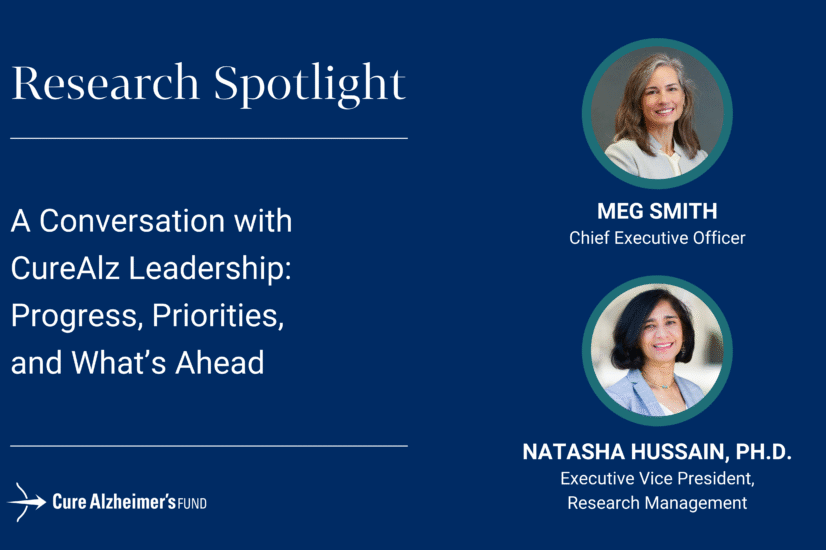
This one-hour discussion will be moderated by CureAlz EVP of Research Management Natasha Hussain, Ph.D., and concludes with audience Q&A. We welcome you to submit questions in advance by emailing [email protected].
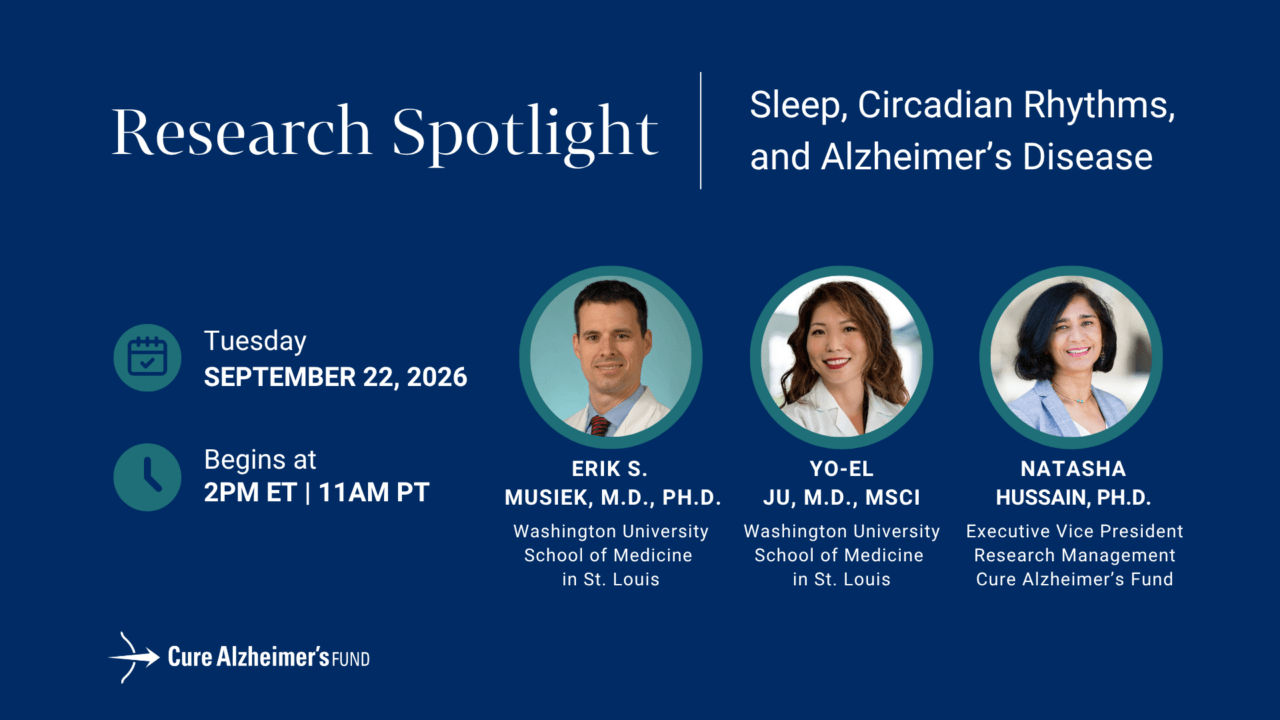
“Research Spotlight: Sleep, Circadian Rhythms, and Alzheimer’s Disease”
Date: Tuesday, September 22, 2026
Time: 2PM ET | 11AM PT
Register here
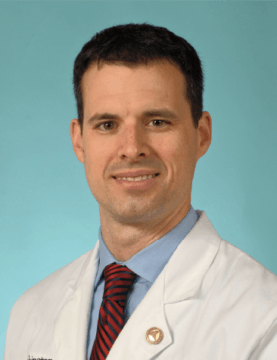
Erik S. Musiek, M.D., Ph.D.
Charlotte & Paul Hagemann Professor of Neurology and Co-Director, COBRAS | Washington University School of Medicine in St. Louis
Dr. Erik Musiek received his M.D. and Ph.D. from Vanderbilt University, and completed neurology residency at University of Pennsylvania before moving to Washington University for fellowship training in dementia, under the mentorship of Drs. John Morris and David Holtzman. He subsequently started his own lab at Washington University. Clinically, Dr. Musiek is a neurologist with a specialty in memory disorders and dementia, and a member of the Knight Alzheimer’s Disease Research Center. His lab research focuses on circadian rhythms and clock gene function in the regulation of brain redox signaling and neurodegeneration, particularly in Alzheimer’s Disease. His work employs mouse and cellular models, and examines the role of circadian clock genes in neuronal homeostasis, the consequences of circadian dysfunction in models of neurodegenerative diseases, and the effect of age-related neurodegenerative disease (such as Alzheimer’s Disease) on circadian systems. The goal of these lines of inquiry is to identify novel neuroprotective strategies based on the endogenous circadian system and its regulation of brain susceptibility to neurodegenerative insults. Dr. Musiek is an investigator in several clinical studies through the Knight Alzheimer’s Disease Research Center at Washington University, and also conducts clinically-oriented research examining circadian rhythms in humans and how they relate to biomarkers of Alzheimer’s Disease pathology.
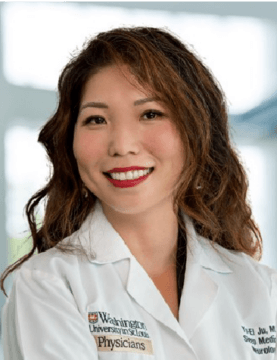
Yo-El Ju, M.D., MSCI
Barbara Burton and Reuben Morriss III Professor of Neurology | Washington University School of Medicine in St. Louis
Dr. Yo-El Ju is a physician-scientist studying the relationship of sleep and neurodegenerative diseases. Dr. Ju earned her undergraduate degree in neurobiology at Harvard College, followed by her M.D. at Columbia University College of Physicians and Surgeons. She completed her residency training in neurology, fellowship training in sleep medicine, and a master’s degree in clinical investigation, all at Washington University in St Louis. She joined the faculty at Washington University School of Medicine in 2011. Dr. Ju co-directs the Washington University Center on Biological Rhythms and Sleep (COBRAS). Her research focuses on 1) the bidirectional relationship between sleep disturbance and Alzheimer’s Disease; and 2) REM sleep behavior disorder (RBD) which is often a prodromal manifestation of synucleinopathy such as Parkinson’s or Lewy body disease. She is the recipient of multiple awards for her research, including the Wayne Hening Sleep Medicine Investigator Award from the American Academy of Neurology, and the Young Investigator award from the World Association of Sleep Medicine. In addition to her research work, she sees patients at the Washington University Sleep Medicine Center and at Barnes-Jewish Hospital.
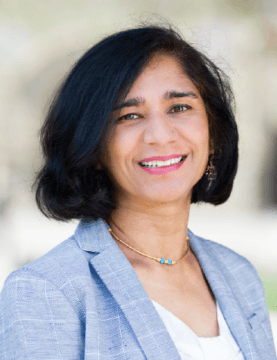
Natasha Hussain, Ph.D.
Executive Vice President, Research Management | Cure Alzheimer’s Fund
Dr. Natasha Hussain joined Cure Alzheimer’s Fund in 2025 as Executive Vice President, Research Management. She brings deep experience advancing neuroscience and cross-disciplinary research initiatives. Most recently, Dr. Hussain served as the inaugural Associate Director of the Knight Initiative for Brain Resilience at Stanford University, where she led strategic programming and partnerships to accelerate discovery in brain health and longevity. Prior to Stanford, Natasha was Scientific Director of the Kavli Neuroscience Discovery Institute at Johns Hopkins, fostering collaboration between neuroscientists, engineers, and data scientists. Natasha attended McGill University, earning a BSc in Biology and Environmental Science and a Ph.D. in Neurology and Neurosurgery.